~ Though some people agreed with Herny, signing the Act of Supremacy was a purely selfish decision on his part that many of his subjects, gentlemen and peasants alike, disagreed with, resulting in the Pilgrimage of Grace.
- People in Herny's court who agree
- Common people who disagree
- Gentlemen who disagree
**The Pilgrimage of Grace was a a movement that went from 1536 to 1537 in which many of Henry VIII's subjects protested his signing of the Act of Supremacy. In signing this act, Henry made himself the head of the Anglican Church of England.This upset many of his Catholic subjects, causing them to rebel and protest in the form of the Pilgrimage of Grace. Though some people agreed with Herny, signing the Act of Supremacy was a purely selfish decision on his part that many of his subjects, gentlemen and peasants alike, disagreed with, resulting in the Pilgrimage of Grace.
**There were some people close to Henry who defended his decision to sign the Act of Supremacy, but their numbers were very few. Richard Morrison, a writer hired by Thomas Cranmer, published a pamphlet titled "A Remedy for Solution," in which he wrote, "Those that are of a worser sort must be content that the wiser rule and govern them. An order must be had and a way found so that the better rule the rest," (doc. 7). He was completely convinced that Henry was above the peasant people, and therefore had a right to rule however he so chooses. Even after all the rebellion, Henry still was adamant and his decision and thought that the rebels were merely misguided. Thinking he was being kind, he wrote, "The royal majesty, duly informed that your offenses proceeded from ignorance and false tales, is inclined to extend his most gracious pity and mercy towards you and to grant to you his free pardon provided that you heartily repent your offenses and make humble submission to his highness," (doc. 9). Despite what Henry said, the people were not protesting any "false truths," nor were they "merely misguided." They knew exactly what they were doing, and he did not want to face the reality that his decision was not beneficial to his country or his subjects. Even behind this facade of kindness and mercy, he tried and convicted 144 of the participants in the Pilgrimage of Grace, 65% of all of those who had been tried (doc. 10). In order to defend his wrong decision, Henry just decided to execute the people who had opposed him.
**The majority of the people who had opposed Henry and participated in the Pilgrimage of Grace were peasants. 110 of the 144 people convicted were commoners (doc. 10), but even though they knew they could have been facing death, they were still adamant in their protests. And, unlike the motives behind Henry's original signing of the Act of Supremacy, these protesters did what they did for very unselfish reasons. The "Oath of Honorable Men" sworn by the marchers states, "You shall not enter into our Pilgrimage of Grace for worldly gain. Do so only for your love of God, for the Holy Catholic Church militant, for the preservation of the King and his heirs, for the purification of the nobility, and to expel all evil counselors," (doc. 1). They marched not for personal gain, but for the greater good, for a better cause, and for a better future. They proudly marched in the name of God, sporting a holy chalice and Christ's wounds on their flag, representing their own religious wounds, given to them by Henry VIII (doc. 3). These protesters were knocked down time and time again, and not only by the king and his English nobles. A Marchers' Proclamation delivered at many gatherings states, "We must be ready to help one another when thieves or Scots would rob or invade us either by night or day," (doc. 2). Even people from a different country were happy to persecute these commoners. Catholic monks wrote a ballad for the marchers that talks about how they were "robbed, spoiled and shorn of cattle and corn," (doc. 4). People were trying to take everything away from these peasant marchers, but they still pushed on for their beliefs. Henry VIII had not thought about the consequences of his actions for his peasant subjects in signing the Act of Supremacy, but after he did this the peasants themselves thought of one another and banded together against their selfish king.
**It was not only peasants who disagreed with Henry's unjust decision; it was also gentlemen of England. One gentleman, Robert Aske, attempted to do even more than protest. He wrote a letter to Henry VIII, asking him to do such things as "to have the supreme head of the Church be the pope in Rome as before," and "to have the monasteries' houses, lands and goods returned to them," (doc. 5). Aske tried as hard as the peasants did to change things, maybe even more so, addressing Henry VIII specifically. Right up until his death Aske believed that Henry's signing of the Act of Supremacy was for the worst. In his testimony right before his execution, he said, "Once the monasteries in the north gave great help to poor men and laudable service to God. Now no hospitality is shown to travelers," (doc. 11). He goes on to talk about how ruined the monasteries are and how this should be corrected, but Henry still thinks he has done the right thing for his country. Even Sir Thomas Temple, a former member of Parliament, wrote that, "The King should grant our petition against the traitor Thomas Cromwell and his adherents, or at least exile them from the realm," (doc. 6). Even people who used to work very closely with Henry VIII in Parliament know that he is doing wrong and should correct he and his nobles' selfish actions. During the Pilgrimage of Grace, these gentlemen were much less selfish then the king himself. In the end, 67% of these gentlemen that were tried for treason ended up being convicted (doc. 10).
**Henry VIII's signing of the Act of Supremacy was a selfish act, and it was right of both peasants and gentlemen alike to rebel. For nearly a year, they protested and protested, trying to have their beliefs heard. Though in the end many of them did end up being convicted, their voices were indeed heard. They left an imprint on England and everyone in it. These people convicted of treasons were the ones who knew the truth, and they were the ones who had the right idea about Henry VIII right from the start.
Showing posts with label Great Britain. Show all posts
Showing posts with label Great Britain. Show all posts
Friday, 21 January 2011

Elizabeth I and Isabella I Midterm
~ Elizabeth I of England knew that religion could tear her country apart, and made special precautions to keep every one of her citizens happy, unlike Isabella I of Spain, who let her religion prevent her from seeing what was best for her country.
- Isabella I
- Spanish Inquisition
- Spanish Netherlands
- Granada
- Elizabeth I
- Compared to her sister Bloody Mary
- Emphasis on Protestantism, but not too much
- Compared to her successor, James I and his son Charles
- How they were the same
- Though different religions, still strong beliefs
**In the 15th and 16th centuries, religion was a big part of politics in every European country. Alliances were formed because of shared religions. Countries were brought together and made stronger by a religious identity. However, religion also had the power to make a country weaker. Entire wars like the Thirty Years War broke out based off of religion. Because different rulers had different religious preferences, it was difficult for a ruler to please all of his or her subjects. However, Elizabeth I of England knew that religion had the ability to tear her country apart, and made special precautions to keep every one of her citizens happy, unlike Isabella I of Spain, who let her religion prevent her from seeing what was best for her country.
**Elizabeth I's predecessor Mary was very Catholic, burning Protestants that opposed her and trying to force her religion on her already-Protestant subjects. After her sister's reign, Elizabeth had a lot of religious mess to clean up. She reinstated all of the previous Protestant acts that her brother Edward IV and her father Henry VIII had had in place, but in doing this did not threaten any of the subjects that had been Catholic. She put her subjects before her religion, just like she had put her country before her love life and had never gotten married. Though it was hard for a ruler to keep his or her country happy, Elizabeth put her country's religious needs before her own and did just that, making her a politique.
**Isabella I of Spain, on the other hand, was very strictly Catholic. She exhausted many of her country's resources in order to remove the Muslim population in the stronghold of Granada, losing many workers that would have greatly benefited her country. She imposed the Spanish Inquisition on her people, forcing them to convert to Catholicism. She tried to force her religion on the Dutch, taking over the Spanish Netherlands. The Dutch did not want this, so they asked England for help, and Elizabeth I and her army was able to completely obliterate the Spanish armada, with Isabella coming off the worst in this battle.
**Though they went about their politics in different ways, both Isabella and Elizabeth were adamant about their beliefs. One of the first things Elizabeth did when she came to power was institute all previous Protestants acts. Though she did not force anyone to convert, she was sure to make her religious preference known. Isabella was a bit more obvious about her religion, but both women wanted to leave an impression on their country about what they thought the right religion was. Because religion was such an important factor in politics at this time, both rulers made sure that theirs was known.
**Elizabeth I and Isabella I were both very strong rulers, but one used religion to help make her country stronger, and the other's religion happened to weaken their country. Elizabeth was able to establish a sense of English Protestantism in a peaceful way, not having to do anything like the Spanish Inquisition. Isabella, on the other hand, was too eager to fight for her religion, when fighting would not have been necessary at all. If she had gone about it in a more peaceful way, it is possible that her country may have been as successful as England at this time.
Friday, 10 December 2010
Tuesday, 19 October 2010
Revised Henry VIII's Divorce of Catherine of Aragon and Separation of the Church
Henry VIII made a brash decision to sign the Act of Supremacy, bestowing upon himself the authority over the Church of England, in order to be able to divorce his wife Catherine, who would not give him a son, and marry the younger Anne Boleyn. By making himself head of the Church of England, Henry disconnected himself from Rome and the Vatican, and had not only the power of the crown, but also the power of the supreme religious leader. Henry made it so that he himself and only himself "shall have full power and authority...to visit, repress, redress, record, order, correct, restrain, and amend all such errors, heresies, abuses, offenses, contempts, and enormities," (http://www.thenagain.info/Classes/Sources/ActSupremacy.html) which gave him any and all authority over the kingdom of England, and presented the very easy opportunity to abuse his extreme amount of power. Consequently, he also gave himself the ability to marry any woman who would have him, since he had the power to divorce any of his wives should he so choose. Catherine of Aragon was the first victim of this. In signing the Act of Supremacy and divorcing Catherine, Henry was unjustified because he pushed his power to its limits, and abused the privileges he already had in order to steal more away, angering Catherine, the Holy Roman Empire, and many of his own subjects.
On a personal level, Catherine could not have been fond of Henry's decision to take away her position as queen and divorce her for a younger woman, all because she could not produce a son. She had been in power for 24 years, serving her husband faithfully and attempting to give him an heir many times, but all of her children were miscarried, stillborn, or died in infancy, except for one: Mary. Henry was displeased with her and thought their marriage was cursed. Catherine writes him, "You have cast me into many calamites," (http://englishhistory.net/tudor/letter5.html) letting him know how much pain and stress he had caused her, but Henry never really cared about her as anything more than an object that could give him a true male heir. When the Vatican would not let him divorce Catherine, he made himself head of the Church of England and broke Catherine's heart, sending her away as Princess Dowager and moving on to Anne Boleyn. Catherine had tried to retain her position as Henry's wife and queen, not letting Thomas Cranmer oversee their divorce because "her cause was before the Pope she would have none other judge," (http://www.fordham.edu/halsall/source/cramner-hen8.html). Catherine demanded that the highest authority in the Church declare their marriage annulled, trying to hang on to her beloved husband, but Henry found a way around that for his own selfish purposes. None of the years Catherine was faithful to Henry mattered to him; all that he cared about was his wife, any wife, producing an heir for him. Catherine, on the other hand, loved Henry with all her heart until her dying day when she writes him a letter ending with "Lastly, I make this vow, that mine eyes desire you above all things," (http://englishhistory.net/tudor/letter5.html) letting him know that she will always love him more than anyone. In Catherine's opinion, and the opinions of many who agree with her, it was surely not right for Henry to divorce her without her having any say, and Henry should not have done away with her for such petty reasons.
The Holy Roman Empire, on a more political and religious standpoint, thought that Henry was overstepping his boundaries as king when he intruded on the position of a religious leader. The Vatican, at this time, had a lot of power. The Holy Roman Empire had started out small in 843, but it had grown to cover much of Europe between that time and the time of Henry VIII's reign. Also during this time, the Holy Roman Emperor in charge of the entire empire was Charles V. This man happened to be the nephew of Henry VIII's wife he was trying to divorce: Catherine of Aragon. Not only did the Holy Roman Emperor disagree on this attempted divorce on religious grounds, but Charles was surely somewhat biased in his decision to not annul Henry's marriage, because he was working partly on the behalf of his family. Though this partisan was not completely right, Henry should have yielded to the ruling of the Holy Roman Empire instead of cutting himself and England off completely to satisfy his need for an heir. No matter how hard Henry and his associates tried, the Vatican would not be swayed in its decision to not annul the marriage of Henry and Catherine (http://englishhistory.net/tudor/priwols1.html), so Henry took control of his own Church and made his own rules. In his Act of Supremacy, Henry VIII states that the purpose is "for the conservation of peace, unity, and tranquility of the realm," (http://www.thenagain.info/Classes/Sources/ActSupremacy.html) while in reality he made himself an enemy of the entire Holy Roman Empire by going against their will.
Not only were people of authority against Henry's decision, but many of his subjects and people under him were too. Cardinal Thomas Wosley lost his job and was executed as a result of Henry's discord with the Church, and he surely thought Henry trying to overpower the Vatican was not the best idea. He did all that he could to try to give Henry what he wanted, but it was not enough. Henry, crazy with supreme political and now religious power, ordered Wosley to be killed. Wosley had trusted Henry, saying even upon arrest, "My person was in the king's protection," (http://englishhistory.net/tudor/priwols1.html) assuming that this was a mistake and Henry will save him, where in reality Henry was the one condemning him to the Tower of London. After being thrown in the Tower, Wosley "was much astonished and shortly became ill," (http://englishhistory.net/tudor/priwols1.html) eventually dying as a result of Henry and the fact that, now that he had so much power, people that were once close to him were dispensable. Murder on undeserved grounds, even indirectly, is never ok, and this resulting from Henry's splitting from the Church to divorce Catherine helps to show how Henry's choice was not right, and shows that all the power in his hands corrupted him enough to betray Wosley, one of his chief advisors.
Judging from the viewpoints of many different people in many different positions, as a whole this withdrawal from the Vatican was initially an unjustifiable act of Henry VIII. Some good that came of it in time, though, was a sense of English nationalism when Elizabeth I continued Henry's religious establishment and made Protestantism such a big part of England that it was deeply intertwined in the culture itself. Henry's decision does show that some good can always come from bad. Nevertheless, Henry's decision was made selfishly and has no decent reasons to justify it, but despite his motives, Henry took control and forever changed the fate of England.
Works Cited:
Catherine of Aragon. "Primary Sources - Letter of Katharine of Aragon to Her Husband, King Henry VIII, 7 January 1536." EnglishHistory.net. Web. 28 Sept. 2010. <http://englishhistory.net/tudor/letter5.html>.
Cranmer, Thomas. "Medieval Sourcebook: Letter of Thomas Cranmer, 1533." FORDHAM.EDU. Fordham University. Web. 28 Sept. 2010. <http://www.fordham.edu/halsall/source/cramner-hen8.html>.
"Habsburg History - European Monarch Genealogy." Welcome - European Monarch Genealogy. Web. 28 Sept. 2010. <http://www.monarchgenealogy.com/habsburghistory.htm>.
Hall, Edward. "Primary Sources: The Fall of Cardinal Thomas Wolsey, 1530."EnglishHistory.net. Web. 28 Sept. 2010. <http://englishhistory.net/tudor/priwols1.html>.
"HOLY ROMAN EMPIRE--1500." McMurry University | Christian College | Universities In Texas. Web. 28 Sept. 2010. <http://www.mcm.edu/academic/depts/history/maps/HOLYROMEMPIRE.html>.
"The Act of Supremacy." Then Again. . . Web. 27 Sept. 2010. <http://www.thenagain.info/Classes/Sources/ActSupremacy.html>.
"The Holy Roman Empire’s Imperial Diet: Electoral Votes in 1792." The Napoleon Series. Web. 28 Sept. 2010. <http://www.napoleon-series.org/research/government/c_holyroman.html>.
Sunday, 17 October 2010
"Our Majesty, Queen of England" Trailer
http://www.youtube.com/watch?v=SJV3Fh1pPkc
Thanks to the extremely talented cast and crew of Brianna Glase, Jimmy Knell, Becca Kotula, Mary Kate Luft, Allison Sanphilippo, and Martha Schick (listed alphabetically) and the following primary sources:
Friday, 1 October 2010
Elizabeth I Trailer: Various Notes and Planning
- The Final Product:
- Scenes:
- Being born
- Anne Boleyn holding Elizabeth
- The romping
- Step dad walks through door, Elizabeth cowers/is afraid, step dad closes door, Catherine opens door and sees them, gets mad, banishes Elizabeth
- Mary I and Elizabeth make up
- Mary apologizes to Elizabeth
- Mary: "Forgive me dear sister, I apologize," then they hug
- When Elizabeth finds out she's queen
- Sitting under a tree, people bow to her and address her as queen, she quotes psalms
- Elizabeth: "It is the Lord's doing, and it is marvelous in our eyes,"
- Telling Parliament she's not going to get married
- Elizabeth: "I have already joined myself in marriage to a husband, namely the kingdom of England," -OR- "Better beggar woman and single then Queen and married,"
- Confronting Mary, Queen of Scots
- Elizabeth sitting on throne, Mary comes in, guards take her away
- Spanish Armada/Tilbury Speech
- SPEECH- "By your concord in the camp, and by your valor in the field, we shall shortly have a famous victory over the enemies of my God, of my kingdom, and of my people."
- Casting
- Elizabeth = Martha
- Mary, Queen of Scots = Mary Kate
- Mary Tudor/Jailer= Becca
- Anne Boleyn/Guard= Allison
- Henry VIII/Thomas Seymour/Member of Parliament = Jimmy
- Catherine Parr/Guard= Brianna
- Primary Sources:
- http://www.fordham.edu/halsall/mod/1588elizabeth.html
- http://www.fordham.edu/halsall/mod/elizabeth1.html
- http://englishhistory.net/tudor/eliz1-writings.html#Letters
- http://englishhistory.net/tudor/scot-letters.html
- http://elizabethi.org/us/quotes
- Filming (when and where)
- Thursday at 4:00 at Martha's house
Wednesday, 29 September 2010
Henry VIII's Divorce of Catherine of Aragon and Separation from the Church
Henry VIII made a brash decision to sign the Act of Supremacy, bestowing upon himself the authority over the Church of England, in order to be able to divorce his wife Catherine, who would not give him a son, and marry the younger Anne Boleyn. By making himself head of the Church of England, Henry disconnected himself from Rome and the Vatican, and had not only the power of the crown, but also the power of the supreme religious leader. Consequently, he also gave himself the ability to marry any woman who would have him, since he had the power to divorce any of his wives should he so choose. Catherine of Aragon was the first victim of this. In signing the Act of Supremacy and divorcing Catherine, Henry pushed his power to its limits, and abused the privileges he already had in order to steal more away unjustifiably, angering Catherine, the Holy Roman Empire, and many of Henry's subjects, even though some did happen to be in agreement.
On a personal level, Catherine could not have been fond of Henry's decision to take away her position as queen and divorce her for a younger woman, all because she could not produce a son. She had been in power for 24 years, serving her husband faithfully and attempting to give him an heir many times, but all of her children were miscarried, stillborn, or died in infancy, except for one: Mary. Henry was displeased with her and thought their marriage was cursed. When the Vatican would not let him divorce Catherine, he made himself head of the Church of England and broke Catherine's heart, sending her away as Princess Dowager and moving on to Anne Boleyn. None of the years Catherine was faithful to Henry mattered to him; all that he cared about was his wife producing an heir for him. Catherine, on the other hand, loved Henry with all her heart until her dying day. In Catherine's opinion, and the opinions of many who agree with her, it was surely not right for Henry to divorce her without her having any say, and Henry should not have done away with her for such petty reasons.
The Holy Roman Empire, on a more political and religious standpoint, thought that Henry was overstepping his boundaries as king when he intruded on the position of a religious leader. The Vatican, at this time, had a lot of power. The Holy Roman Empire had started out small in 843, but it had grown to cover much of Europe between that time and the time of Henry VIII's reign. Also during this time, the Holy Roman Emperor in charge of the entire empire was Charles V. Holy Roman Empire Charles V happened to be the nephew of Henry VIII's wife he was trying to divorce: Catherine of Aragon. Not only did the Holy Roman Empire disagree on this attempted divorce on religious grounds, but Charles was surely somewhat biased in his decision to not annul Henry's marriage, because he was working partly on the behalf of his family. Though this partisan was not completely right, Henry should have yielded to the ruling of the Holy Roman Empire instead of cutting himself and England off completely to satisfy his need for an heir.
Not only were people of authority against Henry's decision, but many of his subjects and people under him were too. Cardinal Thomas Wosley lost his job and was executed as a result of Henry's discord with the Church, and he surely thought Henry trying to overpower the Vatican was not the best idea. He did all that he could to try to give Henry what he wanted, but it was not enough. Henry, crazy with supreme political and now religious power, ordered Wosley to be killed. Murder on undeserved grounds is never ok, and this resulting from Henry's splitting from the Church to divorce Catherine helps to show how Henry's choice was not right. On the other hand, there were those such as Thomas Cranmer, who were very much in favor of Henry's decision to separate from the Church in order to divorce Catherine of Aragon. Being the Archbishop of Canterbury, Cranmer provided a decent opposing view of Wosley, since both of them held much religious power in King Henry's court at one point in time.
Judging from the viewpoints of many different people in many different positions, as a whole this withdrawal from the Vatican was initially an unjustifiable act of Henry VIII. Some good that came of it in time, though, was a sense of English nationalism when Elizabeth I continued Henry's religious establishment and made Protestantism such a big part of England that is was deeply intertwined in the culture itself. Henry's decision does show that some good can always come from bad. Nevertheless, there were many more people who disagreed with Henry's choice than those who did agree with his choice, and despite those opinions, Henry took control and forever changed the fate of England.
Works Cited:
Catherine of Aragon. "Primary Sources - Letter of Katharine of Aragon to Her Husband, King Henry VIII, 7 January 1536." EnglishHistory.net. Web. 28 Sept. 2010. <http://englishhistory.net/tudor/letter5.html>.
Cranmer, Thomas. "Medieval Sourcebook: Letter of Thomas Cranmer, 1533." FORDHAM.EDU. Fordham University. Web. 28 Sept. 2010. <http://www.fordham.edu/halsall/source/cramner-hen8.html>.
"Habsburg History - European Monarch Genealogy." Welcome - European Monarch Genealogy. Web. 28 Sept. 2010. <http://www.monarchgenealogy.com/habsburghistory.htm>.
Hall, Edward. "Primary Sources: The Fall of Cardinal Thomas Wolsey, 1530." EnglishHistory.net. Web. 28 Sept. 2010. <http://englishhistory.net/tudor/priwols1.html>.
"HOLY ROMAN EMPIRE--1500." McMurry University | Christian College | Universities In Texas. Web. 28 Sept. 2010. <http://www.mcm.edu/academic/depts/history/maps/HOLYROMEMPIRE.html>.
"HOLY ROMAN EMPIRE--1500." McMurry University | Christian College | Universities In Texas. Web. 28 Sept. 2010. <http://www.mcm.edu/academic/depts/history/maps/HOLYROMEMPIRE.html>.
"The Act of Supremacy." Then Again. . . Web. 27 Sept. 2010. <http://www.thenagain.info/Classes/Sources/ActSupremacy.html>.
"The Holy Roman Empire’s Imperial Diet: Electoral Votes in 1792." The Napoleon Series. Web. 28 Sept. 2010. <http://www.napoleon-series.org/research/government/c_holyroman.html>.
Sunday, 26 September 2010
The Battle of Bosworth Field: Henry VII
I, Henry VII, deserved the English crown,
But I remembered Richard III with a frown.
I was Lancaster, he was not;
And for me to become king would be a long shot. (1)
My right to the crown was from a marriage, (2)
And upon this right Richard disparaged.
There were many accusations against Richard the King
And we Lancasters thought taking his crown would be the only thing. (3)
Richard was cruel, murdering those who got in his way,
And I knew he could never stay. (4)
I turned my Lancasters against the king,
And we were ready to make Richard feel the sting
Of the people who didn't want him to succeed,
And the people who only wanted for him to bleed.
We planned a battle in this War of Roses,
Against the ones the House of Lancaster opposes. (5)
We met in August of 1485,
Bosworth Field was where we arrived. (6)
At first my army felt dismay;
We felt that victory was far away.
Richard's supporters outnumbered the stars;
Because of this, our triumph seemed so far.
But we held up their heads in determination,
And I gave them a proclamation.
We would all fight to our very deaths
If we needed to breathe their last breaths.
Some would live, and some would not,
But none of their legacies would be forgot.
Lives of both of the sides were lost,
At this battle, so great a cost.
But we fought on courageously,
Swinging our swords outrageously.
For us of Lancaster, this paid off
And though the Yorkists at first had scoffed,
Many of their knights and even Richard were slain,
And this victory would be our gain.
With our enemy vanquished, our foes were weak;
So with triumph I could speak.
I, Henry Tudor, became the rightful king,
And a knew dynasty in England would begin. (7)
(1)
"Richard III Society--Croyland Chronicle." Richard III Society - American Branch. Web. 26 Sept. 2010. <http://www.r3.org/bookcase/croyland/croy2.html>.
(2)
"War of Roses Family Tree." Web. 26 Sept. 2010. <http://upload.wikimedia.org/wikipedia/commons/b/bc/WarRosesFamilyTree.png>.
(3)
"Richard III Society--Croyland Chronicle." Richard III Society - American Branch. Web. 26 Sept. 2010. <http://www.r3.org/bookcase/croyland/croy2.html>.
(4)
Warpole, Horace. "Richard III Society--Online Library." Richard III Society - American Branch. Web. 25 Sept. 2010. <http://www.r3.org/bookcase/walpole/walpole1.html>.
(5)
"Richard III Society- Ballad of Bosworth, Text." Richard III Society - American Branch. Web. 25 Sept. 2010. <http://www.r3.org/bosworth/ballad2.html>.
(6)
"Richard III Society-Bosworth Field." Richard III Society - American Branch. Web. 25 Sept. 2010. <http://www.r3.org/bosworth/index.html>.
(7)
"Richard III Society- Ballad of Bosworth, Text." Richard III Society - American Branch. Web. 25 Sept. 2010. <http://www.r3.org/bosworth/ballad2.html>.
But I remembered Richard III with a frown.
I was Lancaster, he was not;
And for me to become king would be a long shot. (1)
My right to the crown was from a marriage, (2)
And upon this right Richard disparaged.
There were many accusations against Richard the King
And we Lancasters thought taking his crown would be the only thing. (3)
Richard was cruel, murdering those who got in his way,
And I knew he could never stay. (4)
I turned my Lancasters against the king,
And we were ready to make Richard feel the sting
Of the people who didn't want him to succeed,
And the people who only wanted for him to bleed.
We planned a battle in this War of Roses,
Against the ones the House of Lancaster opposes. (5)
We met in August of 1485,
Bosworth Field was where we arrived. (6)
At first my army felt dismay;
We felt that victory was far away.
Richard's supporters outnumbered the stars;
Because of this, our triumph seemed so far.
But we held up their heads in determination,
And I gave them a proclamation.
We would all fight to our very deaths
If we needed to breathe their last breaths.
Some would live, and some would not,
But none of their legacies would be forgot.
Lives of both of the sides were lost,
At this battle, so great a cost.
But we fought on courageously,
Swinging our swords outrageously.
For us of Lancaster, this paid off
And though the Yorkists at first had scoffed,
Many of their knights and even Richard were slain,
And this victory would be our gain.
With our enemy vanquished, our foes were weak;
So with triumph I could speak.
I, Henry Tudor, became the rightful king,
And a knew dynasty in England would begin. (7)
(1)
"Richard III Society--Croyland Chronicle." Richard III Society - American Branch. Web. 26 Sept. 2010. <http://www.r3.org/bookcase/croyland/croy2.html>.
(2)
"War of Roses Family Tree." Web. 26 Sept. 2010. <http://upload.wikimedia.org/wikipedia/commons/b/bc/WarRosesFamilyTree.png>.

(3)
"Richard III Society--Croyland Chronicle." Richard III Society - American Branch. Web. 26 Sept. 2010. <http://www.r3.org/bookcase/croyland/croy2.html>.
(4)
Warpole, Horace. "Richard III Society--Online Library." Richard III Society - American Branch. Web. 25 Sept. 2010. <http://www.r3.org/bookcase/walpole/walpole1.html>.
(5)
"Richard III Society- Ballad of Bosworth, Text." Richard III Society - American Branch. Web. 25 Sept. 2010. <http://www.r3.org/bosworth/ballad2.html>.
(6)
"Richard III Society-Bosworth Field." Richard III Society - American Branch. Web. 25 Sept. 2010. <http://www.r3.org/bosworth/index.html>.
(7)
"Richard III Society- Ballad of Bosworth, Text." Richard III Society - American Branch. Web. 25 Sept. 2010. <http://www.r3.org/bosworth/ballad2.html>.
Saturday, 25 September 2010
The Battle of Bosworth Field: Richard III
We Yorks and the Lancasters
At ends we had met;
I am the king,
But the war's not over yet.
Two dynasties fighting
For right of the crown,
But the Lancaster family
Would soon be beat down. (1)
In this House of York,
I was the Duke,
And some think my becoming king
Was just a minor fluke.
When people got in my way,
I shut them down,
Not feeling any regret
Or even showing a frown. (2)
When the Lancastrians came
To rival my court herein,
My knights and I laughed;
We would surely win.
The House of Lancaster
thought Henry VII should be king,
And I disagreed with
Much more that that little thing.
And there were many supporters
On my side,
And even if many
Of them would die,
I knew my army
Couldn't be beat,
And I'd never think
He would taste defeat. (3)
Our armies met in at Bosworth,
August of 1485,
And Henry's surely knew
Not all would come out alive. (4)
My army fought
So valiantly,
But besides that,
This gallantry
Would not prevent
The slaughter that occurred
And the devastation that was caused
By the swinging of a sword.
I thought I'd never fall
This very day,
But before I died,
I could at least say
I took some Lancastrians
With me to the beyond,
And all my supporters
Were obviously still fond
Of the things
That I did
For England
And the politics amid
The ruthless murders
The Lancastrians remember,
But even in the end
I never surrendered
I was killed in the battle,
A brave way to go,
And the histories about me
Surely all show
The triumphs I made
When I was still around
And even though now,
With my bones in the ground,
I, Richard III,
Still live on,
And til everyone forgets,
I will never be gone. (5)
(1)
Warpole, Horace. "Richard III Society--Online Library." Richard III Society - American Branch. Web. 25 Sept. 2010. http://www.r3.org/bookcase/walpole/walpole1.html.
(2)
More, Thomas. "Richard III." Richard III Society - American Branch. Web. 25 Sept. 2010. http://www.r3.org/bookcase/more/moretext.html.
(3)
"Richard III Society- Ballad of Bosworth, Text." Richard III Society - American Branch. Web. 25 Sept. 2010. http://www.r3.org/bosworth/ballad2.html.
(4)
"Richard III Society-Bosworth Field." Richard III Society - American Branch. Web. 25 Sept. 2010. http://www.r3.org/bosworth/index.html.
(5)
Warpole, Horace. "Richard III Society--Online Library." Richard III Society - American Branch. Web. 25 Sept. 2010. http://www.r3.org/bookcase/walpole/walpole1.html.
Friday, 24 September 2010
Anne Boleyn

http://englishhistory.net/tudor/monarchs/boleyn.html#Biography
http://englishhistory.net/tudor/ab-percy.html
http://en.wikipedia.org/wiki/Ann_Boleyn
Thomas Wosley
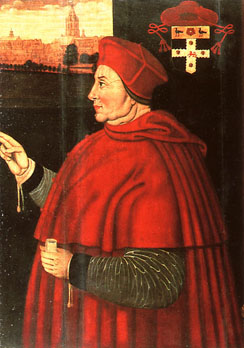
Wolsey was close with the King until he could not get the Vatican to allow Henry to divorce Katherine. In a letter from Anne Boleyn to Wolsey, Anne says, "I cannot comprehend, and the king still less, how your reverent lordship, after having allured us by so many fine promises about divorce, can have repented of your purpose, and how you could have done what you have, in order to hinder the consummation of it" (http://englishhistory.net/tudor/letter8.html). From that point on Wolsey was not on good terms with the King. In 1529, Wolsey's government position and property were taken from him. At Cawood, he was accused of treason and ordered to go to London. On the way there he fell ill and died on Novemeber 29, 1530.
Sources:http://en.wikipedia.org/wiki/Thomas_Wolsey
http://englishhistory.net/tudor/letter8.html
Image from:http://www.nndb.com/people/585/000094303/thomas-wolsey-1-sized.jpg
Catherine of Aragon

"Catherine of Aragon." Wikipedia, the Free Encyclopedia. Web. 24 Sept. 2010. <http://en.wikipedia.org/wiki/Catherine_of_Aragon>.
Thursday, 23 September 2010
Lancastrian vs. Ricardian
Polydore Virgil:
Horace Warpole:
In his 1846 account of Richard III, Virgil takes a more Lancastrian point of view against the king. Describing the purpose of the things Richard III did, he says "Thus covering and cloking certane days his desire, under the colour and pretence of common welthe, he so enveglyd the myndes of the nobilitye," communicating that he believes the Richard used flattery and the excuse that everything he was doing was for the kingdom to get the noble people and aristocrats on his side. The noblemen who saw past his ruse, though, Virgil says that Richard wanted nothing more than to get them out of the way, just like he did to William Lord Hastings. Pertaining to this murder, Virgil says "...Whether yt wer that he [Richard] fearyd his [Hasting's] powr, or despearyd yt possible to draw him to his syde and opynyon, he determynyd to ryd the man owt of the way before his purpose showld be discoveryd to the resydew, whom he did not yeat fully trust," meaning that Richard was all too eager to dispose of people who may get in his way to the throne. On the murder itself, Virgil talks about how Richard hired men to kill Hastings " when he [Richard] showld geave a signe," so they could "kill him forthwith."
Opposed to Virigl, Warpole seems to take a more Ricardian opinion of Richard III, talking about how, though the Lancastrians made Richard out to be horribly deformed, Warpole defends that Richard's shoulders may have only be slightly uneven. In his very first sentence, "With regard to the person of Richard, it appears to have been as much misrepresented as his actions," Warpole shows the reader that he believes that Richard III was not bad, in neither looks nor actions, as some Lancastrians make him out to be. Warpole drew his conclusions about Richard III by looking at paintings from that time period, and upon seeing one of them where Richard has no major deformities, he comments, "Who can believe that an eye-witness, and so minute a painter, would have mentioned nothing but the inequality of the shoulders, if Richard's form had been a compound of ugliness?" He even describes the painter, John Rous, as a self-proclaimed Lancastrian, but Rous still painted the truth of what Richard III really looks like. And Warpole, in passing on this truth and not a lie about the deformities of Richard, is Ricardian at heart, and reflects this belief in his writings.
Tuesday, 21 September 2010
Terms Relating to Richard III
Traditionalist: A tradionalist does things the traditional way, just as the people before them have done, and just how the people in charge want things done.
Revisionist: Revisionists often disagree with popular thought, and go out of their way to back up what they believe. In the time of Richard III, the revisionists were the people who told about the truth, even if the aristocrats were opposed to it.
Lancastrian: This this the way people of the Lancastrian, and later Tudor, dynasty and those who agreed with those people thought of things. In Richard III's case, he was on the opposing side, so many Lancastrians focused on his less-than-ideal traits, and even may have made some things up to make him sound like a villain.
Ricardian: This is the way the people of the Yorkish family and those who were in favor of it viewed Richard III. Since Richard was fighting for them, they glorified him and overlooked his faults, making him seem like a perfect king and ruler.
McPherson, James. "Revisionist Historians." American Historical Association. 7 Feb. 2007. Web. 21 Sept. 2010. .
McPherson, James. "Revisionist Historians." American Historical Association. 7 Feb. 2007. Web. 21 Sept. 2010. .
"Modern History Sourcebook: Editorial of the Liberation Army Daily (Jiefangjun Bao) Mao Tse-Tung's Thought Is the Telescope and Microscope of Our Revolutionary Cause, June 7, 1966." FORDHAM.EDU. July 1998. Web. 23 Sept. 2010. .Nichols, J. B.
"Richard III Society--Croyland Chronicle." Richard III Society - American Branch. Web. 23 Sept. 2010. .
"The Richard III and Yorkist History Server." Richard III Society - American Branch. Web. 23 Sept. 2010. .
William Shakespeare's Richard III
Though Richard III was one of William Shakespeare's historical plays, he managed to inflict some of his own opinion in it, which was that Richard was as evil as his enemies of the House of Lancaster made him out to be. As was the case between the English and the Scottish in the early 1300s, different groups of people had different, biased opinions about different groups of people. The Lancastrians, later the Tudors, thought of Richard III as a wicked man who would -- and did -- kills his friends and relatives to help ensure that he would obtain the crown. Shakespeare was greatly influenced by these views and the writings of Sir Thomas More, who learned much of his information from people who did not like Richard III. One of the biggest evidences of this bias style in which Shakespeare wrote was the fact that, in his play, he portrayed Richard III as being deformed, with a hunchback, like the Tudors, whereas the people of the House of York saw him as being without any flaws. Though many things in Shakespeare's play and the writings of this time period were based on fact, they were also largely based on opinion, and it is for that reason that it is unlikely that the historians of today will ever know the full truth on some matters concerning Richard III.
English Kings During The War of Roses
Henry V
(1387 - 1422) A member of the House of Lancaster, Henry V's biggest accomplishment was the Battle of Agincourt, in which the greatly outnumbered English were able to defeat the French.
Henry VI
(1421 - 1417) Henry VI, crowned king when he was an infant, ruled until 1453 when he was struck with a mental illness and had to be replaced by his successor.
Edward IV
(1442 - 1483) Edward IV was a Yorkish king who, upon discovering that he didn't have enough forces to defeat the Lancastrians, fled to Holland in 1470.
Henry VI
(See above) Henry VI regained the crown for a short time in 1470, but upon Edward's return, he was captured by Edward and executed.
Edward IV
(See above) After returning from Holland, Edward IV had Henry VI executed, and, dying in 1483, he left his sons Edward V and Richard as his heirs.
Edward V
(1470 - 1483) Edward V was set to become king until his uncle Richard III allegedly locked him and his brother Richard in the Tower of London, and they were both mysteriously killed later.
Richard III
(1452 - 1485) Made the Duke of Gloucester at age nine, Richard III was later crowned king after the death of Edward V and Richard, but was defeated by Henry VII at the Battle of Bosworth Field.
Henry VII
(1457 - 1509) After defeating Richard III, Henry VII became the first king of the Tudor line, and was able to retain this position by fighting off many other Yorkish attempts at the crown until his death at age 52.
Tuesday, 14 September 2010
Effects of the Black Plague: DBQ
As the Black Plague ravaged Great Britain, the majorities turned the mass confusion to their advantage when laborers tried to obtain more rights and violently rebelled against their authorities, and when they needed someone to blame the pestilence of the disease on, they looked toward the Jews.
With the death toll staggering from the sever contagion of the plague, the supply and demand went up not only for commodities, but also for hard labor. The people of the working class attempted to take advantage of this by asking for more money for their services. Even if their potential employers did not want to pay anything extra, their were plenty of others who would, so they did not really have a choice. The wealthier people who were higher up in the hierarchy tried to prevent the working class from rising up, but when it all came down to it, they needed these people were indispensable, and the rich needed them. Whether the wealthier liked it or not, the hierarchy was changing, and the peasants were getting wise.
The peasants were rising up in more than just the economy; the plague had wreaked havoc on both the lives of the poor and the lives of the rich, causing their entire way of life to be turned upside down. As a result of the sheer panic that came from this, many of the peasants went crazy. They banded together and even more ruined the lives of the knights and other wealthy people of the nation, harming them, torturing them, and even killing many of them. This peasant rebellion was caused much destruction during the two years of the plague, in addition to the sickness.
When the people realized how devastating the Black Plague was to them and the world in which they lived, they strove to find a scapegoat on which to place the blame. Some people of the Jewish religion had already been previously charged with poisoning well water, and because of this, everyone turned against them and held them accountable for the plague. Jews were a minority, so it was very easy for the rest of Great Britain to overpower them when it came down to it. Many Jews were burned for this apparent crime, and only in cities such as Avignon were they protected by people of authority like the pope.
In this time of bedlam that resulted from the Black Plague, all of these groups -- the employers, the knightly people, and the Jews -- were shoved to the wall as the peasants and the working class were able to collaborate against the peoples they thought were opposing them; though in the end the main thing that resulted from the ruinous plague was not the power of teamwork, but an extreme decrease in Europe's population.
Thursday, 9 September 2010
Opinions on the Scots: DBQ
During the early 1300s, the English and the Scottish had very different views on the Scottish people; the English treated them as brutes, cowards, and greedy murders, and the Scottish glorified themselves to the point of calling themselves holy.
In the minds of the English, William Wallace -- a hero for the Scots -- was viewed as a corrupt, insane man who, when in danger, saved himself and let others do his dirty work. They took much joy in the gruesome and painful death of Wallace, believing that he fully deserved it for his crimes.
Robert the Bruce was a hero for the Scottish, but the English considered him a selfish, volatile man who murdered for his own benefit. He demanded to be the King of Scotland, and when John Comyn disagreed, the English report that Robert the Bruce was not at all hesitant to run him through with a sword.
The Scottish, however, consider the English villains, because of their desire to conquer more and more of Scotland's land, and thought that Scotland was favored by the Lord Himself. They even appealed to the Holy Father and requested for Scotland and its freedom to be sacred, so that the English may not disturb them.
The English and Scottish both exaggerated the truth of what Scotland was really like, and though there may be truth to their words, both nations were too biased against one another and to self-absorbed with their own territories to see what that truth really was.
Tuesday, 7 September 2010
English Monarchy in the Later Middle Ages
- What does the reign of Henry II suggest about the future of English foreign relationships?
- Does the common conception of Richard as "good" and John as "bad" hold up to reality?
Richard had always been an ambitious ruler, ever since he refused to give up his control of Aquitaine to John after their older brother, Henry the Younger, had perished. He skillfully made alliances against his enemies, and was eventually able to obtain the position of king after Henry II had passed. Richard was confident and full of bravado, which was demonstrated when he went off to fight for the Holy Land in the crusades. His people did not let his bravery and compassion for their cause go unnoticed.
John, on the other hand, may as well have been condemned from the moment he was born. He was the youngest, therefore the least favorite of his father, the most disadvantaged, and the one with the least experience. On top of this, he was also the opposite of his brother Richard: a coward. He was afraid of both confrontation and trusting people, which made it very hard for him to succeed in politics when he became king, not to mention the problem of his particular fondness for fine jewelry.
Richard and John, both brothers and adversaries at the same time, were rulers that were greatly shaped by their past, and, in turn, this ruling style would shape England and its surrounding territories forever. The terms "good" and "bad" are subjective, but this much is true: John made more serious mistakes due to his difference in character than Richard, and Richard had more of a knack for ruling than John, most likely due to the discrepancy between the brothers' levels of bravery and trust. Because of this, Richard will always still be remembered as the good king, and likewise John as the bad.
- How did the Magna Carta change the relationship of the Monarch and his subjects?
Subscribe to:
Posts (Atom)